
If you’re planning operational improvements for 2026, start with operational flow.
In most warehouses, output doesn’t stall because of one big issue. It slows down because small friction repeats all day: extra walking, waiting, searching for tools or labels, unclear staging, and rework. Over time, that friction becomes expensive — not only in throughput, but also in accuracy and team energy.
That’s why “more space” or “more headcount” isn’t always the best first move. Often, the most practical gains come from tightening flow across picking, packing and dispatch, supported by the right physical building blocks: warehouse workstations, packing stations, conveyor infeed/outfeed tables, racking and storage solutions, and modular T-slot aluminium components.
Why flow is the fastest lever to pull
A warehouse can look busy and still be inefficient. The tell is when people are constantly moving, but orders aren’t moving at the same pace. In that scenario, you’re usually paying for motion instead of progress.
When flow improves, you typically see three things happen quickly:
-
More throughput from the same footprint
-
Fewer errors and less rework
-
Less daily firefighting
The approach below is simple by design. It’s meant to be practical — something you can assess and improve without turning the site upside down.
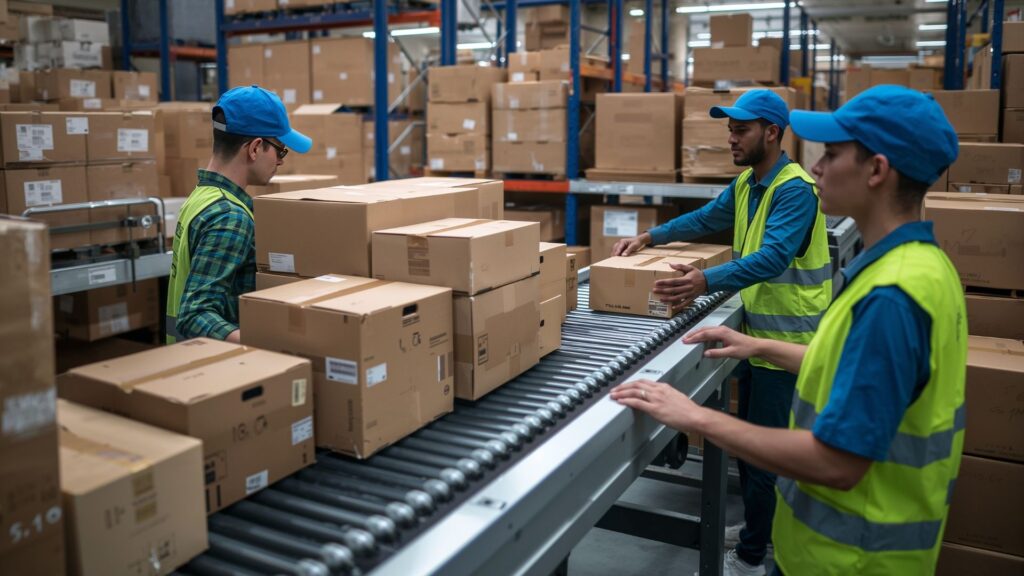
1) Picking: Reduce travel before you ask the team to “go faster”
Picking performance is often limited by travel time. If pickers are backtracking, weaving around congestion, or walking long distances between repeat picks, the system is forcing inefficiency.
Common signs that picking flow is leaking time:
-
Fast movers stored far from packing or dispatch
-
Pick paths that force repeated backtracking
-
Congested aisles that create stop-start movement
-
Time lost hunting for stock due to inconsistent replenishment
A quick way to validate this is to time a handful of common pick runs and watch what’s actually happening. If most of the time is walking rather than picking, the improvement isn’t “work harder” — it’s layout and slotting.
Practical improvements that usually work:
-
Re-slot fast movers closer to packing and dispatch (ABC slotting)
-
Make pick paths more directional to reduce backtracking
-
Support picking with clearer, more accessible racking and storage solutions
If your operation includes bundling or assembly, kitting can also reduce repeated travel — but it works best when it has a proper home (a kitting workstation), not a temporary surface that changes daily.
2) Packing stations: A packing station is not “a table”
Packing is one of the easiest areas to improve because the waste is visible. When packers keep leaving the station for tape, labels, void fill, scanners, or cartons, you’re paying for extra movement on every order.
This is where a purpose-built packing station (or warehouse workstation) makes a measurable difference. The goal is straightforward: everything needed to complete the job should be consistently within reach, and the surface should support a clean flow from incoming to completed.
Common signs your packing area needs a proper packing workstation:
-
Packers step away from the station multiple times per order
-
Labels are printed away from the pack point
-
Tools and consumables don’t have assigned locations
-
The work surface becomes cluttered and inconsistent
A good packing station isn’t complicated — it’s deliberate. You’re trying to reduce searching and walking while improving consistency.
What a well-designed packing station often includes:
-
Dedicated storage for consumables (tape, void fill, bags, cartons)
-
Rails, hooks, and holders so tools don’t disappear
-
Clear “in / work / out” flow on the surface
-
Space for scanning, verification, and labelling without clutter
If you want modularity, T-slot aluminium components are ideal because the station can be adjusted as the process changes — shelves can move, holders can be added, and the workstation can evolve without replacing the whole build.
3) Dispatch: Staging clarity prevents mistakes and rework
Dispatch rarely fails loudly until it’s under pressure. The common problem is mixed staging: ready and not-ready orders together, different couriers mixed, urgent shipments buried under standard ones.
Good dispatch flow comes down to separation and visibility.
Quick wins that reduce dispatch friction:
-
Separate staging by status (ready / not ready / exceptions)
-
Create distinct zones for couriers or service levels
-
Use structured staging with racking, stillages, or clearly marked bays
When everything has a defined place, dispatch becomes predictable — and predictable dispatch protects the rest of the warehouse from last-minute chaos.
Conveyor infeed/outfeed tables: fix the handover point
If items bottleneck at packing, QC, assembly, or dispatch, the handover point is often the culprit. A well-designed conveyor infeed or outfeed table creates a stable, clear transition between steps. Instead of product arriving awkwardly or stacking unpredictably, the flow becomes controlled and consistent.
For many operations, this reduces handling, helps prevent damage, and improves the rhythm at peak times — without needing a full conveyor system overhaul.
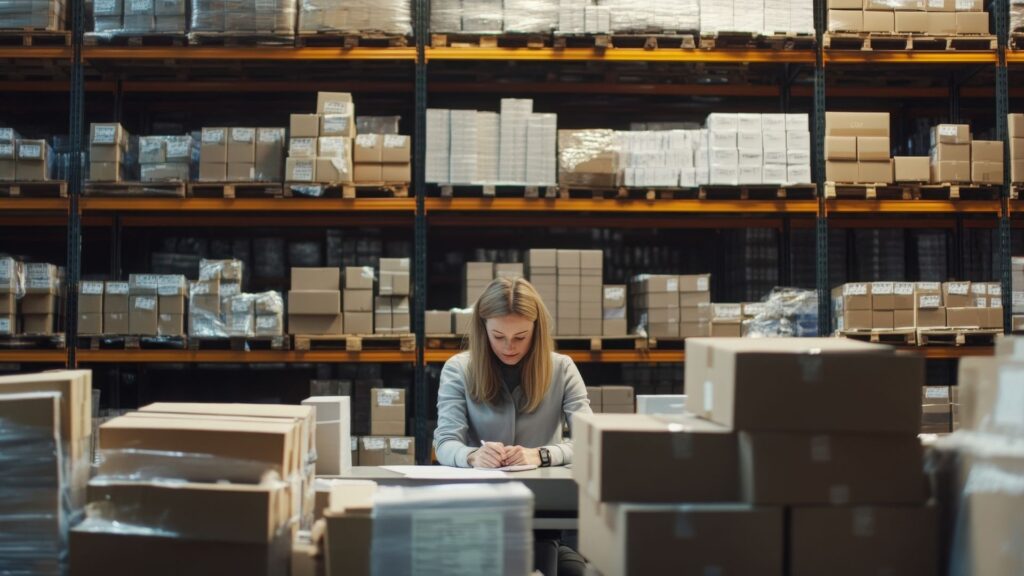
A practical plan for 2026
If you want progress without creating disruption, keep it focused:
-
Choose the biggest bottleneck (picking travel, packing inefficiency, or dispatch staging).
-
Measure a simple baseline for two weeks (time per pick/pack, orders per hour, rework).
-
Make one physical improvement (slotting, a proper packing station, structured staging, or a cleaner handover point).
-
Measure again for two weeks and replicate what works.
This is how you improve operations without constant upheaval — and the wins compound across the year.
Warehouse workstations and packing stations from Siyamuva
If you’re planning upgrades, Siyamuva supports the physical side of flow improvements with warehouse workstations and packing stations, conveyor infeed/outfeed tables, racking and storage solutions, and modular builds using T-slot aluminium components.
Contact Siyamuva to discuss your workflow — we’ll help you identify the fastest improvements and quote on the right workstation, packing station, or storage solution.